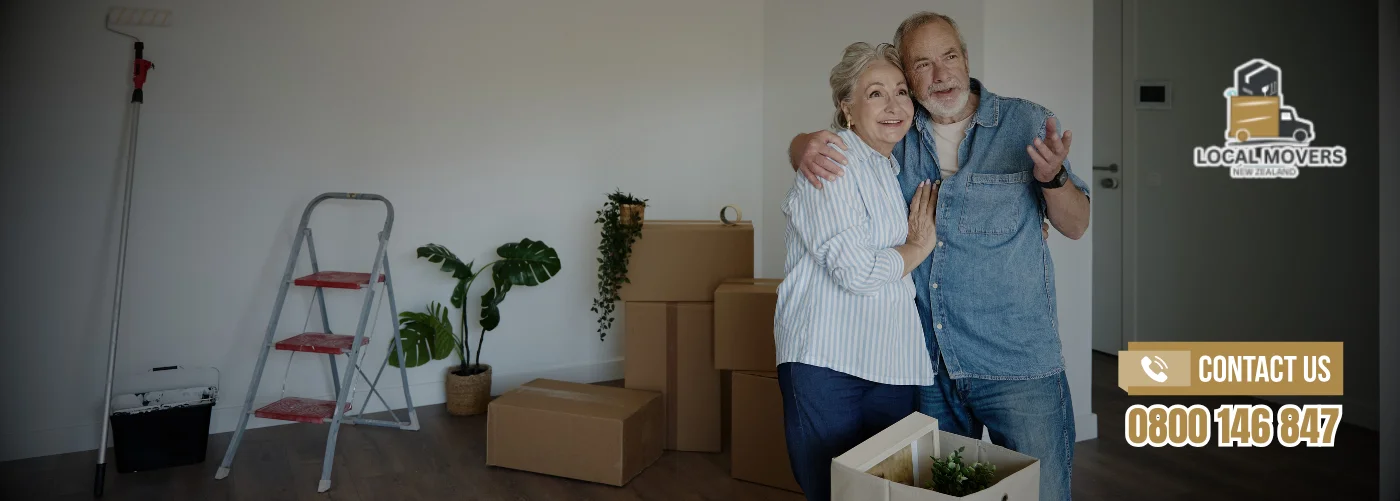
Downsizing can be a big change.
After spending many years in the same family home, deciding what to take, what to let go of and how to organise the actual move can feel overwhelming.
For older Kiwis, the move may be from a long-term family home into a smaller property, apartment or retirement village. For their whānau, it can also mean helping with sorting, packing, transport and setting up the new home.
The good news is that downsizing doesn't have to happen all at once.
With a practical plan and the right support, you can make the transition more organised, manageable and respectful of the belongings that matter most.
A home isn't just a collection of furniture and boxes.
After decades in one property, there may be family photographs, furniture passed down through generations, old documents, decorations, books and countless everyday items that carry memories.
That's why downsizing can take longer than a normal house move.
Instead of simply asking, “Do I need this?”, it can help to think about:
Starting these conversations early can make moving day much easier.
Don't wait until moving week.
Ideally, give yourself several weeks—or longer if you have a lot of belongings—to work through the house gradually.
Start with rooms and items that are easier to make decisions about.
For example:
First: Garage, shed and storage areas
Next: Spare bedrooms and cupboards
Then: Books, clothing and kitchen items
Finally: Sentimental belongings and everyday essentials
This approach gives you time to make decisions without feeling pressured.
One of the easiest ways to organise downsizing is to create four categories.
These are the belongings that will move with you.
Think about the furniture, clothing, kitchenware and personal items you'll actually use in your new home.
Some belongings may be more meaningful to relatives than they are to you.
If you have family heirlooms or furniture you'd like to pass on, speak with family members early.
This avoids last-minute decisions on moving day.
Many items still have plenty of useful life left.
Good-quality furniture, books, kitchenware, clothing and household goods may be suitable for donation or sale.
Broken, damaged or unusable belongings don't need to make the journey to your new home.
Check local disposal and recycling options for anything that cannot be donated or sold.
One of the most common downsizing problems is taking furniture that simply won't fit.
Before deciding what to move, get measurements of the new property.
Pay particular attention to:
Then measure larger furniture such as:
A favourite piece of furniture may have sentimental value, but if it cannot fit through the doorway or leaves little usable space, it may not be practical for the new home.
Downsizing doesn't mean getting rid of everything that makes a house feel like home.
In fact, taking a few familiar belongings can help make the new space feel more personal.
Consider keeping:
You don't need to recreate the entire old house.
Instead, choose the belongings that make the new place feel like your own.
If you're helping a parent or older family member move, try not to take over the entire process.
The belongings belong to them, so where possible, involve them in decisions about what stays and what goes.
A useful approach is to work room by room.
Ask simple questions such as:
“Would you like this in your new home?”
“Do you still use this?”
“Would you like to pass this on to someone in the family?”
“Would you like us to find somewhere to donate this?”
This can make the process feel more collaborative rather than rushed.
Downsizing doesn't necessarily mean the move will be small.
Even a smaller home can contain a surprising amount of furniture and personal belongings.
If packing feels like too much to manage, professional packing and storage services can take some of the work off your hands.
Professional packing can also be useful for:
Clearly labelling boxes by room can make unpacking much easier once you arrive.
Keep important everyday items separate from the main household load.
Prepare an essentials bag or box containing things you'll need immediately after arriving.
This could include:
If the move involves a retirement village or another managed property, confirm beforehand what furniture and household items the new home can accommodate.
Moving day can be tiring, particularly when there are lots of people, boxes and decisions happening at once.
Before the movers arrive:
If you're helping an older family member, consider arranging somewhere quiet for them to spend part of the day while the house is being loaded.
This can reduce the amount of noise and activity they need to manage.
A move into a retirement village or smaller property often requires more planning than a standard house move.
The available space may be significantly different from the family home.
Before moving, check:
Having these details ready before moving day gives your moving team a clearer picture of what is involved.
Some belongings need more care than others.
A piano, large cabinet, heavy safe or valuable piece of furniture may require specialist handling.
Don't leave these items until the last minute.
Tell your moving company about any unusually heavy, fragile or oversized items when requesting a quote.
For items such as pianos, specialist piano moving services can provide the equipment and handling required for the move.
Sometimes the new home is ready before you've finished deciding what to do with everything.
In that situation, storage can provide some breathing room.
Instead of making a rushed decision about every belonging, you can temporarily store selected items and decide what to do with them later.
This can be particularly useful when:
If temporary storage could make your move easier, explore Local Movers' packing and storage services.
Before moving day, work through the following list:
☐ Measure the new home
☐ Decide which furniture will fit
☐ Sort belongings room by room
☐ Separate family heirlooms
☐ Donate or sell unwanted items
☐ Arrange disposal of unusable items
☐ Pack non-essential belongings first
☐ Label boxes clearly
☐ Prepare an essentials bag
☐ Confirm access and parking at the new property
☐ Tell movers about heavy or fragile items
☐ Arrange storage if needed
☐ Confirm the moving date and arrival arrangements
☐ Keep important documents and valuables with you
One of the biggest misconceptions about downsizing is that you have to get rid of everything.
You don't.
The goal is to create a new home that works for the way you live now while keeping the belongings that are genuinely important to you.
Take your time with sentimental items, involve your family where appropriate and focus on what will make your new home comfortable and familiar.
Most importantly, don't feel that you have to organise everything yourself.
If you're helping a parent, grandparent or another family member downsize in Hamilton, professional moving support can take some of the physical work and logistics off your shoulders.
Local Movers' senior moving services are designed around the individual needs of older adults and their families. Depending on the move, support can include careful packing, transportation, unpacking and helping set up the new home.
For a wider household relocation, you can also explore Local Movers' house moving services.
If you're moving between Hamilton and another part of New Zealand, you can also enquire about long-distance moving services.
The team can help you plan the practical side of the move so your family can focus on the transition itself.
Planning a senior move or downsizing in Hamilton? Contact the Local Movers team to discuss your requirements and request a quote.
Copyright © 2024 PPCHERO. All rights reserved.